

TL;DR
The shift: From presenting possible futures to testing a decision and the assumptions beneath it.
Why it matters: An imaginative workshop can leave investment commitments, dependencies and blind spots untouched.
The decision: Name the choice, assign an owner and agree what evidence would make the team reconsider.
The future has been discussed. What changes on Monday?
The scenarios have names. Each has an evocative image, a plausible story and a different combination of technology, politics and social change. The leadership team has debated all of them. Then the annual plan returns to the screen, with the same investment commitments and the same assumptions underneath.
The imagined exchange exposes a specific failure of foresight: the organisation has expanded the conversation without changing how it makes choices. The problem is not a shortage of imagination. It is the missing connection between an alternative future and a decision someone owns today.
Serious scenario planning can change an investment, expose a dependency, justify a small experiment or strengthen the case for staying the course. It need not produce a dramatic strategic reversal. But it should leave leaders able to explain what they tested, what they learned and what would make them reconsider. Otherwise, foresight becomes an impressive performance with no consequences.
For boards, strategy teams and event owners, that is a more useful standard than the novelty of the predictions. The question is whether the work improves judgement before commitments become difficult to reverse.
A scenario is a place to test a decision
A forecast estimates what may happen under specified assumptions. A scenario explores a possible context in which the organisation might have to operate. A target describes an outcome someone wants to achieve. All three can be useful. Confusing them makes a discussion look more certain than it is.
Shell’s 2026 energy scenarios illustrate the distinction. Archipelagos and Surge explore different possible developments; Horizon works backwards from a climate ambition. These are different kinds of exercise, rather than three equally probable bets. Shell explicitly separates its scenarios from its strategy. Their existence does not establish that any particular investment decision is correct.
A leadership team should apply the same discipline to its own materials. Is this a plausible external context, a preferred destination or a quantified expectation? What supports the assumptions? Where do they become speculative? A compelling narrative cannot answer those questions on its own.
The practical benefit comes from placing the same choice inside contrasting conditions. Would a proposed partnership still make sense if access to a market narrowed? Would an automation programme create value if customers wanted more human reassurance? Testing the choice reveals where confidence depends on a future the team has quietly taken for granted.
Why the exercise stops short
One failure begins with scope. “The world in 2040” offers almost unlimited material but no clear test of relevance. “Which capabilities should we fund now if our route to customers changes?” creates a boundary. The longer horizon still matters; it is anchored to commitments being made in the present.
Another failure is political. An attractive scenario can become a defence of an existing strategy. Participants learn which futures are welcome and which make a powerful sponsor uncomfortable. The workshop produces variety in presentation while preserving agreement on the assumptions that matter. Research published in 2026 examines precisely this difficulty: senior leaders’ biases and resistance can constrain scenario work.
A third failure is organisational separation. The people exploring futures do not control budgets, procurement, product priorities or the next strategy review. Their report has an audience but no route into a decision. A more polished presentation will not repair that missing relationship.
This does not mean every exercise must end with an immediate investment. Some work builds shared understanding or identifies an unanswered question. The distinction is between a deliberate learning outcome and an unspecified hope that inspiration will eventually influence strategy.
Keep a record of the decision, not just the scenarios
A useful discipline is to begin with a short decision record and return to it after the scenario discussion. The following is a proposed working framework for leadership teams, not a validated scoring system. Its purpose is to make the connection to action inspectable.
- Name the commitmentWhat must be decided, by whom and by when? Include the cost of waiting and the parts that would be difficult to reverse.
- Expose the assumptionWhat must remain true for the preferred option to work? Separate evidence from expectations about customers, institutions and technology.
- Test contrasting contextsWhich plausible changes would alter the choice? Examine dependencies and interactions, including perspectives outside headquarters.
- Choose the next actionCommit, adapt, run an experiment or preserve an option. Record the reasoning and assign an owner.
- Set the reconsideration ruleWhat observable development would reopen the decision? Specify who monitors it, the review date and the authority to respond.
The final step makes a large difference. “Monitor regulation” is too vague to guide action. “Reassess the supplier agreement when a relevant market-access rule changes” names a relationship between evidence and a commitment. The team must still define the rule, source and response for its own situation; a generic checklist cannot do that work.
Triggers are prompts for judgement, not automatic commands. A single signal may be ambiguous, delayed or misleading. Recording why it matters helps the next discussion distinguish a material change from a passing headline.
An illustrative capacity decision
Consider an illustrative manufacturer deciding whether to concentrate new capacity in one regional hub. This is a hypothetical example, not a reported company case. Its preferred plan assumes dependable cross-border access, competitive energy costs and customers willing to accept a common product configuration.
In one scenario, regional trade deepens and concentration improves efficiency. In another, local requirements multiply and access becomes less predictable. A third combines reliable trade with constrained power supply. The task is to examine how each context changes the attractiveness of the same capacity decision, rather than vote for the most convincing story.
The result might be a staged investment, qualification of a second production partner or a design that supports regional variation. Each preserves flexibility differently, and each has a cost. Paying for optionality is not automatically wise: the team should explain what it protects, what it sacrifices and when that protection stops being useful.
Regional colleagues may also challenge the starting assumptions. A European headquarters, an Indian supplier and a Gulf infrastructure partner can experience the same development through different constraints. Their contribution matters because they may see dependencies that the central plan treats as background. Geography should change the analysis, not merely diversify the examples on the slides.
Look for continuity inside the organisation
Current practice offers useful reference points without proving a universal return on foresight. The Oxford–Hyundai Motor Group Foresight Centre studies how foresight informs strategy and policy. Its programme includes mobility futures and questions about software, data and AI. It demonstrates an institutional commitment to examining the surrounding context; it should not be presented as evidence that a particular workshop increased commercial performance.
Public-sector guidance offers another practical connection. The OECD’s foresight toolkit takes users from assumptions and possible disruptions to testing strategies and developing actions. The relevance for businesses lies in that sequence: constructing scenarios is an intermediate stage in a larger piece of work.
For a company commissioning its own exercise, the implication is straightforward. Bring the relevant decision owner into the scoping conversation. Establish where the conclusions will be discussed next. Ask what information the team would need to turn an interesting implication into a funded experiment or a revised commitment.
Accountability also requires permission to retain a strategy. If the exercise tests the assumptions and supports the existing choice, that can be a useful outcome. Forcing a visible change to demonstrate impact would replace one kind of theatre with another. What matters is a defensible decision and a clearer account of its limits.
Brief the futurist around the work the room needs to do
A keynote can introduce unfamiliar possibilities and give an audience language for discussing them. A facilitated workshop can examine the organisation’s assumptions in detail. A private briefing can challenge a small leadership group. These formats serve different purposes, and none should be sold as a complete substitute for the others.
Before commissioning an expert, ask for an example of how their work connected to a decision process. Confidential client details may be unavailable; the method can still be explained. How were assumptions surfaced? Who participated? How were implications carried into subsequent work? The answer tells you more than the number of trends in the presentation.
Also ask how the expert handles disagreement and regional variation. A scenario that seems plausible to a technology investor may rest on institutional assumptions that a public leader would dispute. Useful facilitation keeps those differences available for examination instead of smoothing them into a comfortable consensus.
Imagination and performance have a legitimate place here. Stories make unfamiliar circumstances easier to consider. “Without theatre” means that the performance serves the inquiry. The audience should leave with something it can investigate, challenge or use, rather than only an emotional impression of the future.
Four perspectives on making foresight useful
These four lenses address different obstacles between seeing a possibility and acting on it. Their application here is Scurati’s editorial interpretation, not an endorsement of the framework by the experts.
Strategic choices
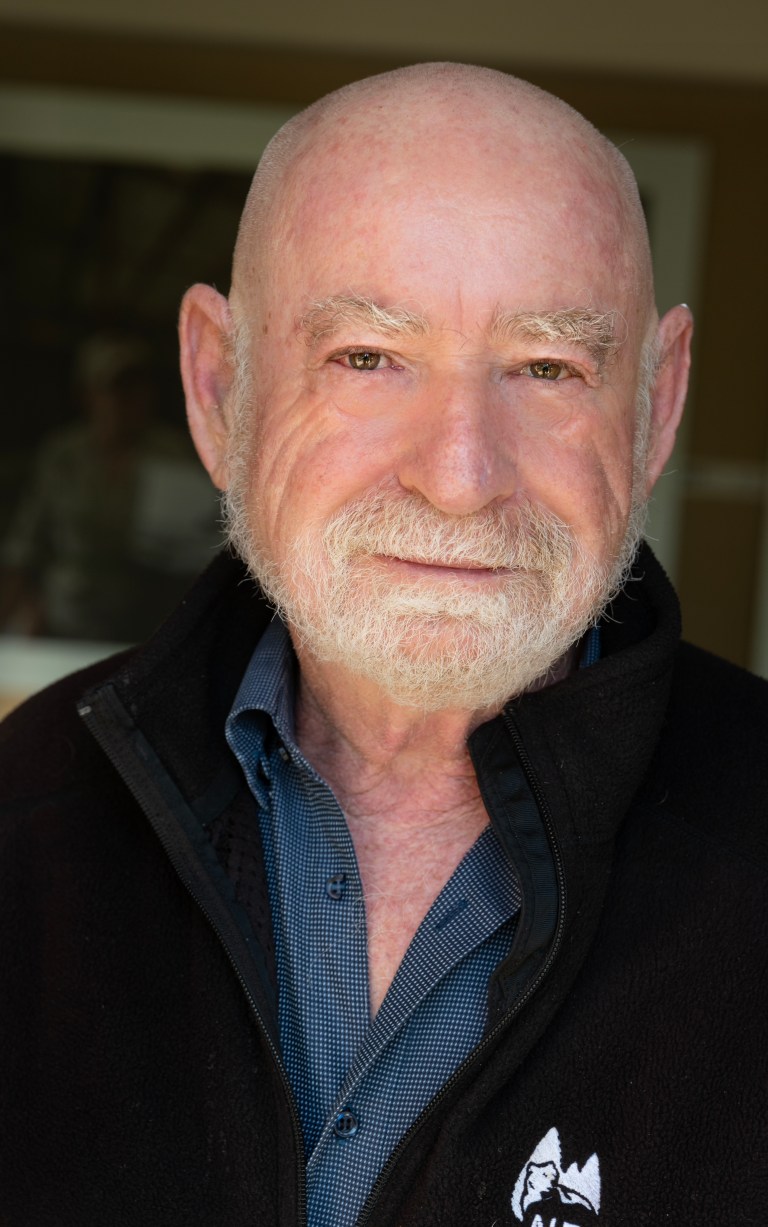
Peter Schwartz
Schwartz connects long-range thinking with an ongoing corporate strategy conversation. His lens asks whether an alternative future changes the options leaders consider today. Useful when the team needs to move from a collection of trends to explicit assumptions about its business.↗System trade-offs
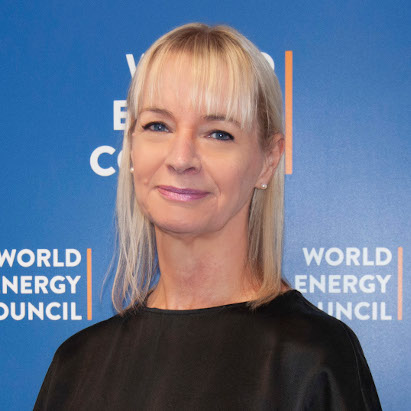
Angela Wilkinson
Wilkinson brings energy and institutional experience to futures work. Her lens makes competing priorities and regional differences visible. Useful when a strategy depends on collaboration between businesses, governments and communities whose definitions of progress may differ.↗Strategic reframing

Rafael Ramírez
Ramírez examines how scenarios change the frame around a strategic problem. His lens challenges the assumptions that determine which options appear possible. Useful when a team keeps improving its answer without questioning whether it is solving the right problem.↗The +1 · Human adaptability

April Rinne
Rinne explores the human relationship with change and uncertainty. Her lens asks whether leaders can act on alternatives they intellectually understand. Useful when the constraint is attachment to a familiar outcome rather than a shortage of information about possible futures.↗Read for the method, not the prediction
Two foundational books deepen this argument. Their value is methodological; the current examples and research above provide the contemporary context. Explore these titles in Books to Book.
The Art of the Long View
Peter Schwartz · Currency · 1996 paperback edition
A foundation for using alternative futures to uncover assumptions and broaden strategic vision. Read it to understand why a well-constructed scenario should change what leaders notice.
Strategic Reframing: The Oxford Scenario Planning Approach
Rafael Ramírez and Angela Wilkinson · Oxford University Press · 2016
Explains how scenarios help leaders reconsider the context around a strategic problem. It deepens the distinction between generating future stories and finding different options for action.
Make the next decision the measure of usefulness
The next strategy meeting offers a practical check. Can the team name an assumption it now treats differently? Has it identified an option worth investigating, a commitment worth staging or a signal worth watching? Is somebody responsible for taking that work forward?
These are indicators of a useful process, not proof of financial impact. Their strength is that they can be examined. They move the evaluation beyond applause, satisfaction scores and the retrospective claim that someone predicted a headline.
For event owners, this changes the starting brief. Begin with the decision, the audience’s existing assumptions and the perspective it lacks. Our guide to speaker curation explains how that question shapes the choice of expert.
The strongest futures conversation leaves a leadership team better prepared to choose under uncertainty. Sometimes the decision changes. Sometimes the team learns why it should hold its course. Either way, the future has entered the work of the present.
SELECTED SOURCES
- Shell — The 2026 Energy Security Scenarios
- California Management Review — Scenario planning research, Volume 68, Issue 3 (2026)
- Oxford–Hyundai Motor Group Foresight Centre — current research
- OECD — Foresight Toolkit for Resilient Public Policy (2025)
- Peter Schwartz — official biography
- Angela Wilkinson — official biography
- Rafael Ramírez — official biography
- April Rinne — official biography
- Currency / Penguin Random House — The Art of the Long View, 1996 paperback
- Oxford University Press — Strategic Reframing (2016)
