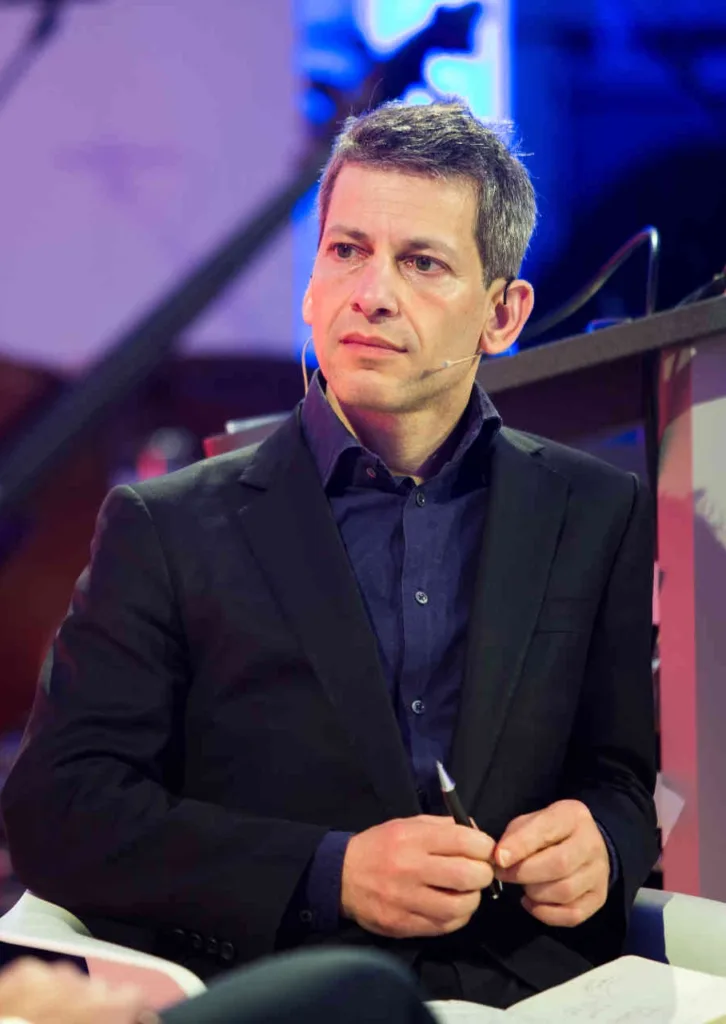
David Rowan is the founding Editor-in-Chief of WIRED UK, an author and an investor focused on the business implications of emerging technology. His work combines reporting, conversations with entrepreneurs and observation of how organisations respond to disruption. He speaks to leadership audiences about AI, changing business models and the conditions that allow innovation to take hold.
At WIRED UK, Rowan covered the people and technologies reshaping industries and helped build a conference and consulting business alongside the publication. His journalism brought him into contact with founders behind major digital platforms and with startup communities beyond Silicon Valley. He has also written technology columns for The Times, GQ, Condé Nast Traveller and The Sunday Times.
His book Non-Bullshit Innovation grew out of a reporting journey across twenty countries. It examines how organisations create meaningful change through business models, customer relationships and ways of working. The cases include established businesses and public institutions as well as startups. For leaders, the book raises a practical question: which examples reveal an approach worth testing in their own context, and what organisational conditions would that require?
Rowan continues to visit research laboratories and startup ecosystems, and his investment activity includes health technology and climate technology. That work connects his public commentary with the people developing new products and services. His current speaking themes include AI strategy, the next phase of technological change, human talent and the relationship between culture and innovation.
His contribution to a leadership programme is an informed external view of what is changing and why it may matter. Rowan can connect technological developments with a sector's specific pressures, while his journalistic approach makes room for questions and debate. He also moderates conversations with leaders and entrepreneurs. In a decision room, his examples are most useful when the audience relates them to its own choices about customers, capabilities, investment and the organisation needed to support change.