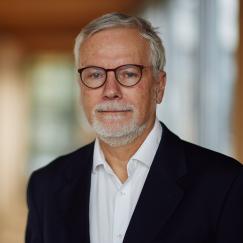
Rafael Ramírez is Professor of Practice at the University of Oxford and Director of the Oxford-Hyundai Motor Group Foresight Centre at Saïd Business School. His research and advisory work explore scenario planning, foresight and strategy. He also studies value-creation systems and the relationships through which organisations shape and exchange value.
Before joining Oxford, Ramírez worked in Shell's scenarios team and was Professor of Management at HEC Paris. He holds a doctorate from the Wharton School of the University of Pennsylvania and master's degrees from York University in Toronto and Oxford. His professional work has involved businesses, governments, international organisations, nonprofits and think tanks across different regions.
At Oxford, Ramírez co-created the Oxford Scenarios Programme and helped develop the Oxford Scenario Planning Approach. His work treats scenarios as a way for people to learn about an uncertain context and reconsider how they understand a strategic situation. The emphasis on reframing makes the approach relevant when extending a familiar forecast leaves important assumptions unexamined.
With Angela Wilkinson, he co-authored Strategic Reframing: The Oxford Scenario Planning Approach. The book examines learning through alternative future contexts and the identification of new strategic options. His wider research on interactive value and networked strategy also asks how an organisation's opportunities depend on relationships beyond its own boundaries. At the Oxford-Hyundai Motor Group Foresight Centre, this inquiry connects with research on how foresight informs strategy and public policy.
For leadership audiences, Ramírez brings methodological depth and experience in making scenario conversations relevant to a real question. His perspective is useful when a board or executive team faces turbulence, uncertainty or a shift in the conditions surrounding its business. The conversation can examine what the group currently assumes, how different contexts might change those assumptions and which options become visible as a result. His contribution centres on improving the way a team understands the situation in which it must act.