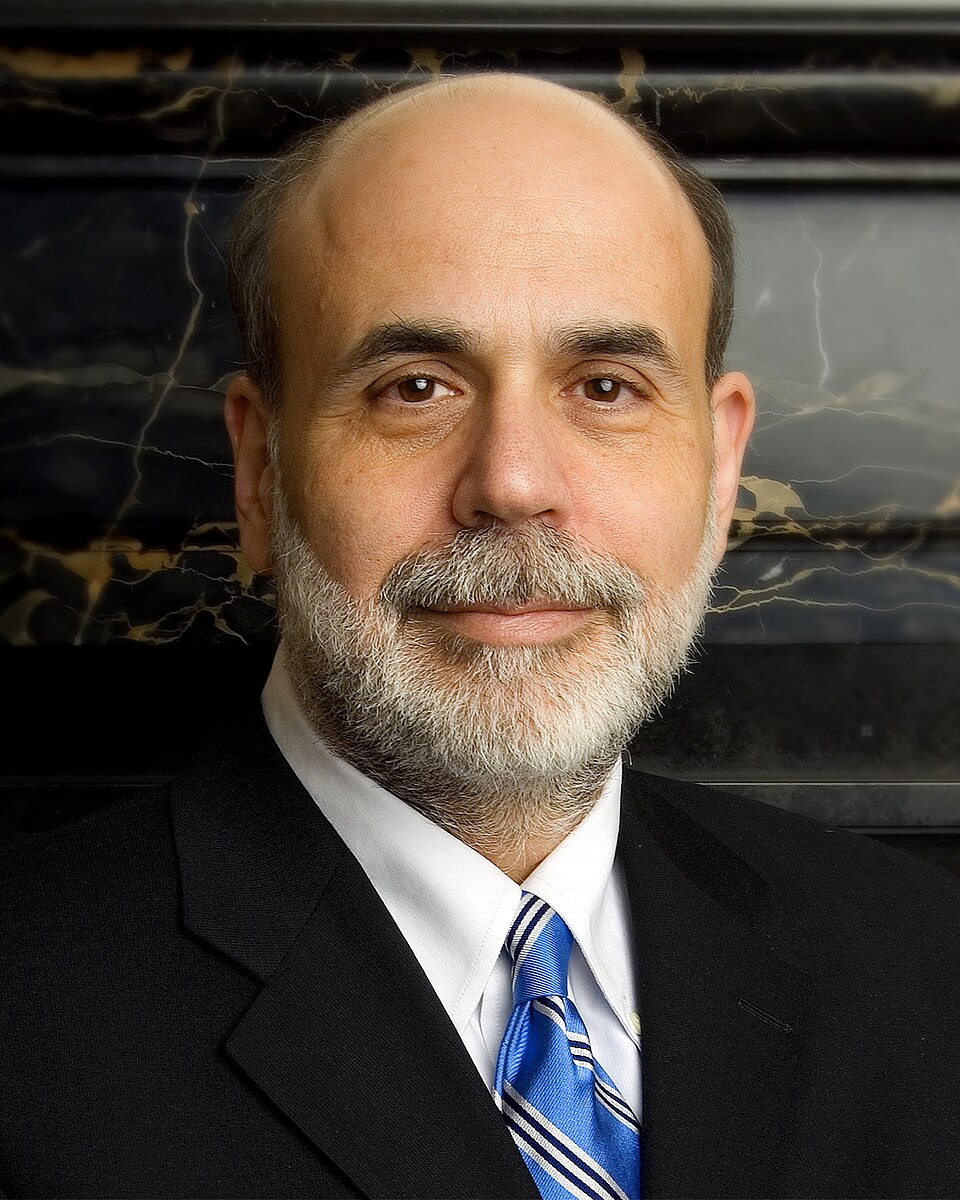
Dr. Ben Bernanke served as Chair of the Board of Governors of the Federal Reserve from 2006 to 2014, leading the United States and the world through the most severe financial crisis since the Great Depression. Appointed by Presidents Bush and Obama, he guided the Fed's response to the 2007–2008 crisis and the Great Recession, introducing unprecedented tools — quantitative easing, forward guidance, and a formal inflation target — while transforming how the central bank communicates with markets and the public. In 2022, he was awarded the Nobel Memorial Prize in Economic Sciences for his research into banks and financial crises.
An economist of rare distinction, Bernanke graduated summa cum laude from Harvard and earned his PhD at MIT, where his dissertation on the Great Depression laid the intellectual foundation for the very crisis he would later confront in office. He spent nearly two decades as a professor at Princeton, chairing its economics department, before entering public service. Today a Distinguished Fellow at the Brookings Institution, he is the author of the bestselling memoir The Courage to Act and, most recently, 21st Century Monetary Policy.
Few people in modern history have had to apply their life's research in real time, under the highest possible stakes. Bernanke spent his academic career studying how the Federal Reserve's failures deepened the Great Depression — and then, as Fed Chair, found himself with the authority to ensure those mistakes were not repeated. His central insight, drawn from both the archive and the crisis room, is that financial panics are not abstractions but catastrophes for the real economy, and that decisive, imaginative central banking can be the difference between a recession and a depression. For audiences, he offers something no commentator can: the perspective of the person who held the line.