Keynote Topics:
- The Five Competitive Forces That Shape Strategy
Porter's foundational framework is the most widely used tool in business for understanding why some industries are more profitable than others. He shows leaders how to read the structural forces shaping their industry and stake out a position that is both more profitable and more defensible. - Competitive Advantage: Cost, Differentiation, and the Value Chain
Drawing on his classic work, Porter explains the two fundamental routes to advantage — cost leadership and differentiation — and how the value chain reveals where real advantage is created and lost inside an organization. - Creating Shared Value
Porter's influential idea that companies can generate economic value by solving social problems — not as philanthropy, but as strategy — reframes the relationship between business and society for a new generation of leaders. - Strategy and Competitiveness in a Changing World
From national competitiveness to the economics of healthcare, Porter applies the same structural thinking to the largest challenges facing economies and institutions, offering leaders a rigorous way to think about long-term advantage.
speaker Bio:
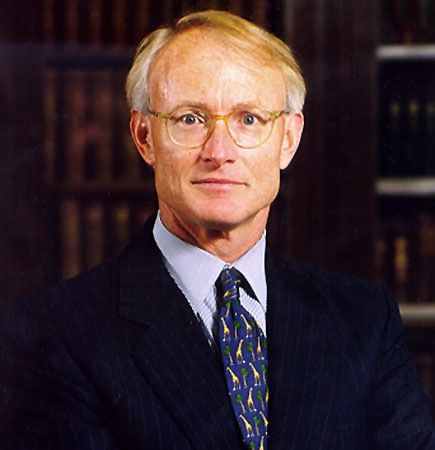
Michael E. Porter is generally regarded as the father of modern strategy and the world's most influential thinker on competitiveness. The Bishop William Lawrence University Professor at Harvard Business School — the university's highest faculty honor — he is the most cited scholar in economics and business, and a six-time winner of the McKinsey Award for the best Harvard Business Review article of the year. His 1979 framework of the five competitive forces started a revolution in the strategy field that continues to shape both business practice and academic thinking nearly half a century later.
The author of landmark works including Competitive Strategy and Competitive Advantage, Porter developed the concepts — Five Forces, the value chain, generic strategies, the Diamond model — that are taught in virtually every business school in the world. A graduate of Princeton, where he topped his class in engineering, and of Harvard, he founded the Institute for Strategy and Competitiveness and has applied his structural style of thinking far beyond business: to national economic development, to the economics of healthcare, and to the idea of "shared value" — the argument that companies can create economic value by addressing society's problems.

Summary: Signature Framework — The 5 Forces
Porter's singular contribution was to give strategy a rigorous foundation. Before him, strategy was largely a matter of consulting frameworks and pattern recognition; Porter grounded it in industrial-organization economics, arguing that the long-run profitability of any business is determined by five structural forces — the bargaining power of buyers and suppliers, the threat of new entrants and substitutes, and the rivalry among existing competitors. The job of the strategist, in his framing, is to understand those forces and find a position where they are weakest. That insight has proven extraordinarily durable, applied by companies, governments, and institutions worldwide. For any leadership audience grappling with where to compete and how to win, Porter offers the original and still-definitive framework.
speaker Video:
Explore keynote speakers, topics & insights
Keynote Topics & Curated Speaker Examples→
Insights & Strategic Deep Dives →