

TL;DR
The shift: From coordinating information to owning judgement, context, development and conflict.
Why it matters: Removing administrative work can expose a managerial mandate that lacks time, authority or clear boundaries.
The decision: Redesign the mandate before changing the management layer: subtract work, assign responsibility, enable action and review the result.
The report is ready. The difficult conversation is not.
An AI assistant has prepared the weekly update, summarised the project meeting and proposed next week's allocation of work. The dashboard looks coherent. Then two people disagree about a customer's priority, a junior colleague cannot explain an apparently excellent analysis, and another team rejects the handover. The manager still has work to do. It is simply less visible in the report.
This imagined scene captures the question behind the future of middle management with AI. When software can perform parts of coordination, what should the manager be responsible for? Removing administrative tasks does not answer that question. Neither does declaring that every manager must become a coach while leaving the calendar, incentives and decision rights unchanged.
The useful starting point is a new managerial mandate. Identify the work technology can reliably carry, then give managers the time and authority to handle judgement, context, development and conflict. Some roles may shrink or disappear. Others may become more demanding. The case for either outcome should follow the work that remains, rather than an assumption that a flatter organisation is automatically a better one.
The case for redesign is stronger than the case for a universal cut
Current workforce evidence points towards organisational redesign. The May 2026 Chief People Officers' Outlook identifies structure and job design as a leading priority, alongside reskilling and AI deployment. These are executive expectations, not evidence that a particular management layer has already become unnecessary.
Research on AI at work also suggests that the conditions around employees matter. A 2026 survey of AI-using knowledge workers across ten countries associates manager support and organisational practices with reported value from AI. Separate US workforce research links active managerial support with more frequent AI use and stronger perceptions of its usefulness. These associations do not prove that adding managers causes productivity gains. They do challenge the idea that access to capable software makes management irrelevant.
For a CHRO or COO, the decision therefore needs more precision. Which managerial activities can be removed? Which responsibilities become more consequential? Where will unresolved issues go? An organisation can reduce the number of boxes on its chart while pushing coordination and coaching onto people whose roles do not acknowledge either burden.
Our broader Future of Work analysis starts with the work itself. Here, the narrower question is what kind of management that redesigned work requires, and how the organisation will make it possible.
Coordination is only part of management
A schedule allocates hours. It does not settle which promise should be kept when capacity is insufficient. A summary records what participants said. It may miss why a colleague remained silent. An allocation model can recommend who should do a task, but the recommendation needs a purpose: immediate throughput, skill development, customer continuity or resilience if an experienced employee leaves.
These choices involve competing objectives. If the organisation wants speed and learning, someone must decide when a slower assignment is worth making. If sales wants flexibility and operations needs consistency, someone must negotiate a workable boundary. The manager's value lies partly in translating broad intentions into decisions that fit the situation.
AI can help with that work. It can generate alternatives, retrieve precedents or reveal a pattern worth investigating. The distinction is between support for judgement and ownership of its consequences. A manager who accepts an automated recommendation should still be able to explain the relevant trade-off and recognise what information the system did not have.
That does not give management a permanent entitlement to every approval. A routine decision with clear rules may belong with the team or the system. The task is to identify where a managerial intervention adds something specific, then remove approvals that contribute only delay.
Give context a route into the system
Consider an illustrative regional service team using AI to prioritise customer cases. The model ranks requests by urgency and expected commercial impact. A local manager knows that one apparently small account is testing a new product, that a translated message understates a serious complaint, and that the available specialist is already helping another region. This is a hypothetical example, not a reported company result.
The response should not depend indefinitely on one manager remembering every exception. Relevant context needs to become available to the people and tools making the next decision. The manager can distinguish an unusual circumstance from a recurring rule, document what changed and agree when the underlying workflow needs revision.
Regional variation matters here. A workflow designed at headquarters may encounter different language conventions, customer expectations, labour arrangements or routes to escalation elsewhere. Managers in an Indian delivery centre, a German manufacturing site and a Gulf service operation may need different forms of discretion. A common operating model should specify which standards travel and which choices remain local.
The danger is creating a hidden correction layer. If managers constantly repair automated allocations without authority to change the process, the dashboard can look efficient while the organisation depends on unrecorded human effort. Exception patterns should inform redesign, rather than become an extra responsibility that no one measures.
Protect the work through which people learn
A junior employee may now produce a credible first draft without doing every step that previously developed their understanding. That can be a useful gain. It also raises a managerial question: how will the employee learn to recognise a weak argument, defend a conclusion or notice that the brief was wrong?
Removing routine work should therefore trigger a review of development pathways. Teams can ask people to explain their reasoning, compare competing outputs, investigate errors or take responsibility for a bounded customer problem. The aim is to preserve opportunities to build judgement while using new tools well.
Coaching then becomes concrete. A manager can ask what evidence supports the recommendation, which alternative was rejected and what would change the conclusion. An employee who can edit a polished output is not necessarily ready to own the decision behind it. Equally, someone who uses AI confidently should not be penalised merely for reaching a good answer through a different process.
Senior leadership must provide room for this work. If every saved hour becomes another delivery target, managers will struggle to develop people even when development appears in their job description. The trade-off belongs in staffing and performance discussions: what learning capacity will the team protect, and what near-term output is it prepared to forgo?
Conflict does not disappear when information improves
Two functions can agree on the facts and still want different outcomes. One may be rewarded for revenue, another for reducing risk. AI can clarify the options without resolving the incentives. Treating the disagreement as a communication problem can conceal a genuine choice that needs an accountable owner.
Managers need a clear boundary between conflicts they can resolve and those requiring escalation. They should also be able to challenge a target that creates contradictory demands. Asking them to absorb tension while denying them authority turns management into emotional buffering for a poorly designed organisation.
Empathy matters because people experience the same change differently. It helps a manager understand a concern and make a difficult conversation possible. It does not remove the obligation to set standards or make an unwelcome decision. Useful leadership combines attention to people's circumstances with a defensible explanation of what happens next.
This complements our analysis of leadership and culture. Culture becomes visible in how leaders respond; the managerial mandate determines whether someone has the time and authority to respond effectively.
A practical test: subtract, assign, enable, review
Before expanding a manager's span of responsibility or removing a layer, write a short mandate for one real team. The following is Scurati's proposed decision framework, not a validated assessment instrument.
- SubtractName the reports, meetings and approvals that will stop. Establish which replacements work well enough to rely on.
- AssignSpecify who owns exceptions, quality, development and cross-team conflicts. Include an escalation route when objectives collide.
- EnableGive the owner the necessary discretion, information and protected time. Check whether the team size permits the promised support.
- ReviewAgree what would show the redesign is working and what would trigger a change. Examine quality, learning and unresolved work alongside throughput.
Apply the test to a specific commitment. If managers are to spend more time coaching, which recurring obligation will disappear? If a team becomes larger, what support becomes available and which kinds of case will still require individual attention? If an agent allocates work, who can override it and who improves its rules?
These questions may support a smaller management structure. They may also reveal that a proposed reduction saves a salary while transferring work to specialists, senior leaders or employees. Both possibilities deserve examination. The standard is a credible operating model, with the trade-offs visible.
Select and evaluate managers for the new mandate
Once the role changes, selection should change with it. Being the strongest technical contributor does not establish an ability to develop others. Being fluent in AI demonstrations does not establish judgement about when its output should be challenged. Being personally reassuring does not establish the ability to resolve a conflict fairly.
Use situations that resemble the responsibilities being assigned. Ask a candidate to explain a contested allocation, give feedback on a flawed analysis or respond when a team's metric improves while another team's workload increases. Look for reasoning, curiosity and an ability to revise a view when evidence changes.
Evaluation needs the same discipline. Meeting counts and reporting speed are easy to observe, but they reveal little about whether people can work more independently or whether recurring problems are being resolved. Combine delivery evidence with qualitative examination of decisions, development and handovers. Avoid replacing one narrow metric with another attractive score.
Four lenses for redesigning the middle
These perspectives address different parts of the managerial mandate. Their application here is Scurati's editorial interpretation, rather than an endorsement of this framework by the experts.
Work design

Lynda Gratton
Gratton's organisational research asks how work arrangements affect performance and people. Her lens helps leaders test whether the manager's new responsibilities fit the way the team actually works, rather than adding coaching to an unchanged role.↗Tasks and skills
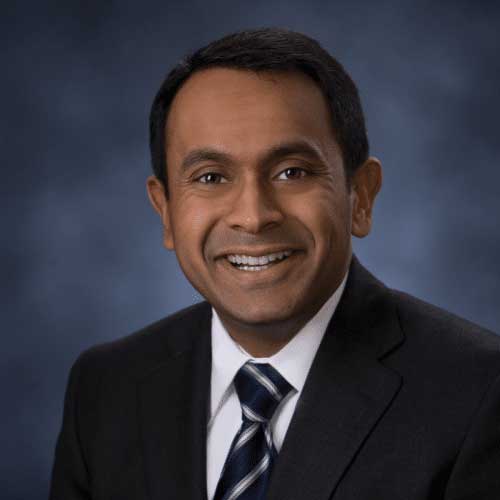
Ravin Jesuthasan
Jesuthasan brings a practitioner perspective on decomposing work and organising around skills. His lens helps separate activities that can move to technology from responsibilities that need a human owner, before changing job titles or reporting lines.↗Learning and adaptability

Heather McGowan
McGowan's work on adaptability and empathy addresses the human experience of changing work. Her lens asks how managers help people learn and contribute when their expertise, routines and sense of professional identity are being reshaped.↗Leadership evidence

Tomas Chamorro-Premuzic
Chamorro-Premuzic combines business psychology with leadership assessment and commercial experience. His lens challenges the criteria used to select managers: which behaviours demonstrate useful competence, and which merely make a candidate appear convincing?↗Two books that deepen the redesign
Explore these titles in Books to Book. They offer methods for organising work; the 2026 evidence above supplies the current AI context.
The Skills-Powered Organization
Ravin Jesuthasan and Tanuj Kapilashrami · The MIT Press · 2024
Explores how organisations can move towards work organised around skills. It helps leadership teams examine what changes when the managerial task extends beyond allocating people to fixed jobs.
Redesigning Work
Lynda Gratton · The MIT Press · 2022 US edition
A foundational method for understanding, imagining, testing and embedding new work arrangements. Read it to make the manager's changing role part of a deliberate organisational redesign.
Give the middle a mandate it can deliver
The next leadership discussion should produce more than a position on whether managers matter. Choose a team, identify the coordination work that will genuinely disappear and agree who owns the responsibilities that remain. Then check whether the proposed structure gives those people enough capacity to deliver.
For an event owner, that is also a better brief. Ask which management decision the audience needs to make: how to allocate work, develop people, handle exceptions or select leaders. A useful expert conversation should expose the trade-offs and help the room form a mandate it can test.
The manager in the middle earns a place through the work the organisation needs. AI may change that work substantially. Leadership's responsibility is to redesign the role honestly, with its authority, capacity and accountability considered together.
SELECTED SOURCES
- World Economic Forum — Chief People Officers’ Outlook, May 2026 (30 April 2026)
- Microsoft — Work Trend Index 2026; AI-using knowledge workers in ten markets
- Gallup — State of the Global Workplace 2026; Q1 2026 US AI findings
- London Business School — Lynda Gratton, current faculty profile
- Mercer — Ravin Jesuthasan, work and skills redesign
- Heather McGowan — official biography
- Russell Reynolds Associates — current leadership biography, Tomas Chamorro-Premuzic
- Russell Reynolds Associates — Leadership Lab launch, 1 September 2026
- The MIT Press — The Skills-Powered Organization, 1 October 2024
- The MIT Press — Redesigning Work, 3 May 2022 US edition
