

The US election calendar offers a clear date: 3 November 2026. Corporate investment decisions offer fewer clean boundaries. A technology contract signed this autumn may run for years. A new facility may depend on electricity capacity that arrives later. A financing assumption may outlive the political argument that made it seem reasonable.
That mismatch gives the midterms their business relevance. The question for a leadership team is which assumptions about policy, capital and technology deserve another examination before the next commitment becomes difficult to reverse.
Julius Baer’s recent market outlook brings the election, inflation and resilient AI infrastructure spending into one discussion. For companies, the useful next step is to separate those forces and then test their interactions. A favourable political development cannot make an unproductive AI deployment profitable. Strong demand cannot guarantee timely access to power. A durable technology opportunity can still carry a fragile financing structure.
The resulting leadership task is practical: identify what depends on Washington, what depends on the balance sheet, and what depends on execution. Give each dependency an owner and a threshold for action.
What a changed Congress can change
The Federal Election Commission confirms 3 November as the 2026 federal general election date. For companies assessing the congressional result, the starting point is institutional power. Congress controls legislation, taxation and spending; the executive branch administers and enforces the law. A change in congressional control alters the political conditions in which policy is made. It does not, by itself, replace existing rules.
This distinction matters when an investment case relies on a tax provision, public funding, a regulatory decision or access to a particular market. Each has a different route from political intention to commercial consequence. A campaign promise, a bill, an enacted law and an agency decision belong at different stages of the analysis.
For planning purposes, consider two broad possibilities. Continued alignment between the administration and congressional majorities may create more scope for legislation, while leaving disagreements over specific measures unresolved. Divided government may make some legislative changes harder, while leaving significant executive activity in place. Neither description establishes the direction of inflation, the dollar or business confidence.
For each major investment, leaders should therefore ask: which specific policy could change the economics, who has the authority to change it, and what observable decision would justify revising the plan? That produces a more useful discussion than treating a party label as a complete business scenario.
Inflation enters through the business model
Inflation reaches companies through several channels: input costs, wages, customer demand and the terms on which capital is available. Those channels need their own assumptions. A business may be able to pass on some costs while finding that customers delay purchases. Another may face modest operating-cost pressure but a more expensive refinancing.
The same discipline applies to AI. Julius Baer argues that major AI infrastructure spending has remained resilient despite elevated borrowing costs. That observation concerns the persistence of an investment cycle. It does not establish the return on a particular project, or the financing resilience of every company participating in it.
An enterprise buying AI services, a supplier building additional capacity and a lender financing a data centre have different exposures. Their decisions should reflect those differences. For the buyer, the test may be workflow performance and the full cost of deployment. For the supplier, it may be the reliability of contracted demand. For the lender, it may be the quality of the borrower, collateral and repayment structure.
In the 2027 budget discussion, political scenarios should sit alongside separate assumptions for demand, operating costs and financing. Allow them to interact, but avoid making one election outcome responsible for every favourable or unfavourable change.
Follow the commitments behind the AI buildout
Recent research adds an important financing question. A September 2026 Brookings summary of Stijn Van Nieuwerburgh’s conference paper examines the expanding use of joint ventures, private credit, leases and other structures around AI infrastructure. It highlights exposure to uncertain demand, technological change, power availability and a concentrated tenant base. The paper also cautions that it is premature to equate the sector’s systemic risk with earlier credit booms.
For a leadership team, the implication is to examine where its own commitments sit. A long-term purchase agreement, a capacity reservation or a guarantee can matter even when it is not described internally as a technology investment.
Three questions deserve explicit answers. Who bears the cost if demand arrives later than expected? What happens if equipment needs replacing sooner? Which obligation remains if the original commercial rationale weakens?
This scrutiny should extend to counterparties. An apparently attractive contract may depend on a supplier’s ability to obtain financing, complete construction or secure electricity. Those dependencies belong in the commercial discussion before a long-term agreement is signed.
The electricity connection belongs in the strategy discussion
On 14 October, the International Energy Agency published Powering Artificial Intelligence. Its executive summary describes grid constraints, equipment bottlenecks and permitting delays, alongside growing concern over electricity prices and water use. It also warns that connection queues can include speculative or duplicate projects, making future demand difficult to assess.
That makes location and delivery timing strategic variables. Before relying on new capacity, a company should understand the status of the connection, the conditions attached to power supply and the consequences of delay. For organisations buying cloud services, these issues can inform questions about resilience, contractual protections and the geography of future capacity.
The international implications vary. A European company reviewing dollar-denominated technology commitments faces a different decision from an Indian infrastructure supplier or a Gulf investor assessing a new data-centre project. Each needs to trace its actual exposure to US policy, technology access, financing and local infrastructure. The American election provides a common reference point; the operational questions remain specific to the business.
Give the 2027 plan three tests
A useful preparation for the post-election discussion is a short review of the company’s largest proposed commitments. For each, record the assumption, the evidence supporting it, the person responsible for monitoring it and the threshold that would change the decision.
- The policy testIdentify any dependency on legislation, government funding or an administrative decision. Specify the milestone that matters: adoption of a measure, implementation guidance or a decision affecting a particular transaction. Keep a political expectation separate from an established entitlement.
- The economic testExamine demand, productivity and total cost together. For AI, include integration, process redesign, oversight and ongoing operation. Where the investment depends on someone else’s growth, test the quality and concentration of that demand. Revisit the financing assumptions separately from the technology assumptions.
- The delivery testIdentify the physical or organisational constraint that could delay value: power, equipment, supplier capacity, data access or the team’s ability to change a workflow. Name the evidence required before committing the next tranche of resources.
Consider, for example, a manufacturer evaluating an AI-enabled service contract. It can test service quality in a bounded deployment while negotiating expansion rights and checking the provider’s delivery dependencies. That approach preserves learning while keeping the larger commitment tied to evidence. It is an illustrative decision design, not a claim about a particular company’s results.
This extends the principle behind Foresight Without Theatre: a scenario earns its place when it changes a decision, a trigger or a contingency. After the midterms, the review should begin with which assumptions changed and which commitments now need attention.
Four perspectives for the leadership conversation
A leadership briefing on this subject benefits from complementary expertise. The following 3+1 selection brings political analysis, macroeconomics, technology competition and energy into the same conversation. The questions below are Scurati’s proposed briefing questions, rather than statements attributed to the speakers.
The political decision space

Ian Bremmer
As founder and president of Eurasia Group and GZERO Media, Bremmer connects political developments with the risks facing businesses and governments. His coverage includes the 2026 midterms and the administration’s strategy beyond them. He provides the explicit US political perspective in this selection, helping a leadership team distinguish electoral developments from their potential policy consequences. Which changes in Washington could alter our operating assumptions, and through what mechanism? ↗Capital and macroeconomic exposure

Kenneth Rogoff
The Harvard economist and former IMF chief economist brings expertise in international macroeconomics, financial crises and monetary institutions. His perspective helps connect inflation, debt and the dollar with the financing assumptions inside a business plan. He gives the discussion a rigorous basis for examining how political developments might interact with existing financial vulnerabilities. Which commitments become vulnerable if financing or currency conditions move against us? ↗Technology competition and industrial capability

Dan Wang
Wang’s work on China’s technological development and his book Breakneck widen the frame beyond the US political calendar. His experience researching technology in China brings an industrial perspective to questions about AI, manufacturing capability and the competition between American and Chinese systems. This is especially valuable for organisations with suppliers, customers or expansion plans across both markets. Which competitive advantages depend on industrial capabilities that will take years to build, whatever happens in November? ↗The +1 · Energy and physical delivery
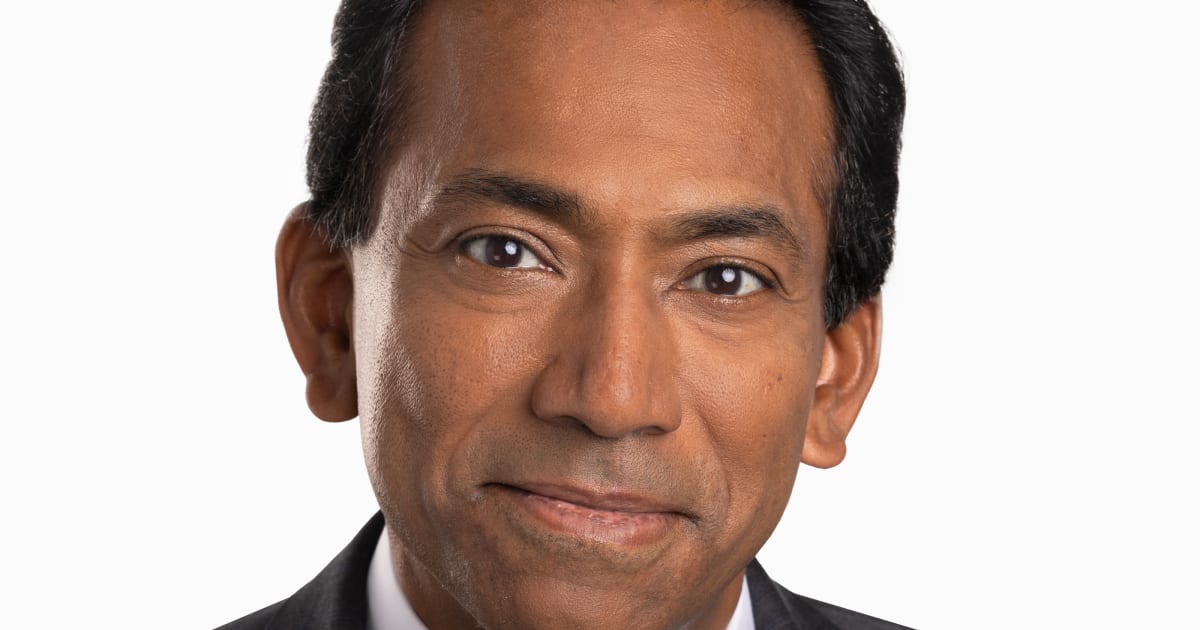
Vijay Vaitheeswaran
The Council on Foreign Relations’ director of the energy and climate program brings the discussion to the infrastructure that makes digital growth possible. His work spans energy, innovation and the relationship between AI and electricity. He is the wildcard because he tests a physical dependency that a political or financial discussion can otherwise leave implicit. Can the power system and delivery chain support the growth our strategy assumes?↗Three recent books to extend the discussion
Explore these perspectives in Books to Book. All three first editions fall within the two years preceding 17 October 2026.

Our Dollar, Your Problem: An Insider’s View of Seven Turbulent Decades of Global Finance, and the Road Ahead
Explore in Books to BookKenneth Rogoff · Yale University Press ·
A lens on the dollar’s role in global finance and the vulnerabilities surrounding it. Useful for leadership teams examining international financial exposure.
ISBN 9780300275315

Breakneck: China’s Quest to Engineer the Future
Explore in Books to BookDan Wang · W. W. Norton ·
A comparative examination of Chinese and American development, industrial capability and institutional choices. It provides a longer horizon for the technology-competition questions raised by the election.
ISBN 9781324106036

Chokepoints: American Power in the Age of Economic Warfare
Explore in Books to BookEdward Fishman · Portfolio ·
An account of how financial networks and critical technologies become instruments of state power. It helps connect geopolitical decisions with commercial dependencies.
ISBN 9780593712979
Bring a consequential question into the room
For a leadership offsite or executive dialogue, the strongest brief begins with a commitment the organisation is considering. Ask the expert to examine its assumptions, expose dependencies and help the team identify what would justify changing course.
The midterms provide a timely reason to convene. The lasting value is a clearer view of the decisions that follow.
Selected sources
- Julius Baer — Midterms, inflation and AI
- FEC — 2026 federal election date
- US House — branches of government
- Brookings — Financing the AI buildout
- IEA — Powering Artificial Intelligence, 14 October 2026
- IEA — Executive summary
- GZERO — Midterm strategy and beyond
- Yale University Press — Our Dollar, Your Problem
- W. W. Norton — Breakneck
- Portfolio / Penguin Random House — Chokepoints
