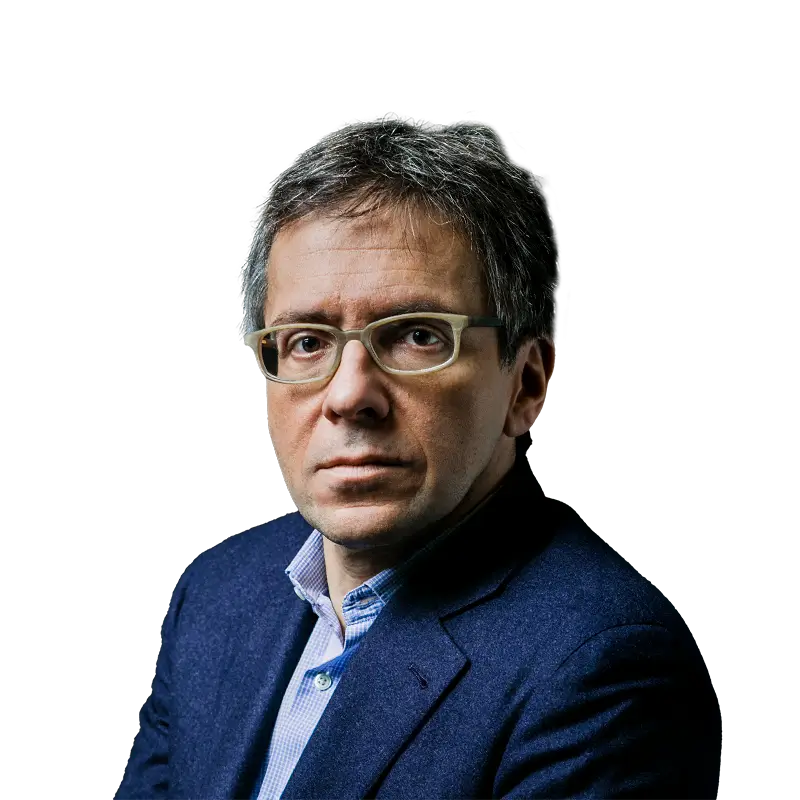
Ian Bremmer is a political scientist and entrepreneur who has built a career out of making sense of a chaotic world for the people running it. He is the president and founder of Eurasia Group, “the leading geopolitical risk advisory firm” trusted by businesses and governments worldwide. In the late 1990s, Bremmer essentially invented the field of political risk analysis for Wall Street, starting Eurasia Group with just $25,000 and a bold idea: that leaders needed better insight into how politics, instability, and culture impact global markets. Today, with offices on four continents, Eurasia Group is the go-to source for CEOs and heads of state seeking to understand everything from Chinese economic policy to Middle East tensions. Bremmer’s mission has always been to provide “clearheaded insights” in an arena often dominated by noise. He’s known for his frank, no-blame assessments and the ability to boil down complex events into what matters for decision-makers.
A prolific author and commentator, Bremmer has written 11 books on global affairs – including Every Nation for Itself: What Happens When No One Leads the World and Us vs Them: The Failure of Globalism, both of which became New York Times bestsellers. These works introduced broader audiences to his ideas like the “G-Zero world” – a world with no single country in charge, which Bremmer argues is the reality of the 21st century international order. He founded GZERO Media (cheekily named after that concept) to engage the public in conversations about global issues. In fact, Bremmer hosts GZERO World with Ian Bremmer, an award-winning weekly show on U.S. public television, where he interviews world leaders and distills international news with a dose of humor and insight. It’s not uncommon to see him explaining the war in Ukraine or climate negotiations not only with statistics and maps, but even using satire – including puppets of global figures – to drive a point home. This creative approach keeps his analysis accessible and memorable, proving that even at the highest levels, communication is key.
Bremmer occupies a unique vantage point at the nexus of policy and business. He serves as Foreign Affairs columnist and editor-at-large for Time magazine, where his essays guide millions of readers on issues like tech competition between the U.S. and China or the state of democracy. He’s also a frequent guest on major news networks – from CNN and MSNBC to FOX and the BBC – and notably, he’s welcomed by all sides of the political spectrum. In an age of polarization, Bremmer prides himself on being an “independent voice” on global issues, one who criticizes or praises world leaders based on actions and outcomes rather than ideology. This even-handed credibility led to his appointment as the Rapporteur (lead drafter) for the United Nations High-Level Advisory Board on Artificial Intelligence in 2018, where he helped international experts navigate the geopolitical implications of AI. It’s one example of how Bremmer’s expertise now extends beyond traditional politics into the forces tech and economics that are reshaping global power structures.
When Ian Bremmer steps on stage, audiences know they’re in for a whirlwind tour of the globe. He typically starts by mapping out the current geopolitical landscape – the key players, hotspots, and trends that are driving risk in the world today. With an encyclopedic recall of facts and an analyst’s eye, he might explain the latest developments in China’s leadership politics, the behind-the-scenes of OPEC negotiations, or what to expect in the next U.S. elections – all in one fluid narrative that connects the dots. Bremmer has a knack for coining pithy terms and frameworks that help people remember the big picture. For instance, he’ll casually reference a coming era of “technopolarity” (where tech companies rival countries in influence) or describe Europe, not as a union, but as a “collection of 27 kitchens sharing one refrigerator” to illustrate its coordination challenges. These memorable insights both inform and entertain. He’s also known to pepper his talk with real-world examples from companies he’s advised: e.g., how a manufacturing CEO should think about supply chain risk in an unstable Turkey, or how social media regulation in Brussels could affect a Silicon Valley firm’s strategy.
Audiences consistently praise Bremmer’s pragmatism. He doesn’t just list problems – he offers potential paths forward. After outlining a thorny issue like decoupling with China, he might suggest concrete steps for Western firms to diversify sourcing or for policymakers to manage alliance pressure. He is also adept at the Q&A format: give him any question on any country, and he’ll have not just an answer, but an engaging mini-story or historical anecdote that adds color. For example, ask about Latin America and you might hear about his recent meeting with a finance minister there, or a quick comparison of today’s politics with the 1980s debt crisis. This on-the-fly depth comes from decades of immersion in global affairs.
What truly stands out is Bremmer’s passion for education. He believes that understanding geopolitics shouldn’t be limited to experts in Washington or corporate boardrooms. That’s why he often says his goal is to bring a “political science lens” to everyone – be it through his teaching (he’s taught at Columbia University and was a Senior Fellow at Harvard) or his media outreach. On stage, this translates into a style that is highly relatable. He doesn’t talk at the audience; he talks to them, in plain language, occasionally tossing in humor, pop culture references, or personal experiences. One moment he might recount a meeting with a foreign president, the next he’s joking about the World Cup or a hit Netflix show that sheds light on a country’s culture. It’s all part of Bremmer’s approach to break down the barrier between “foreign affairs” and our daily lives.