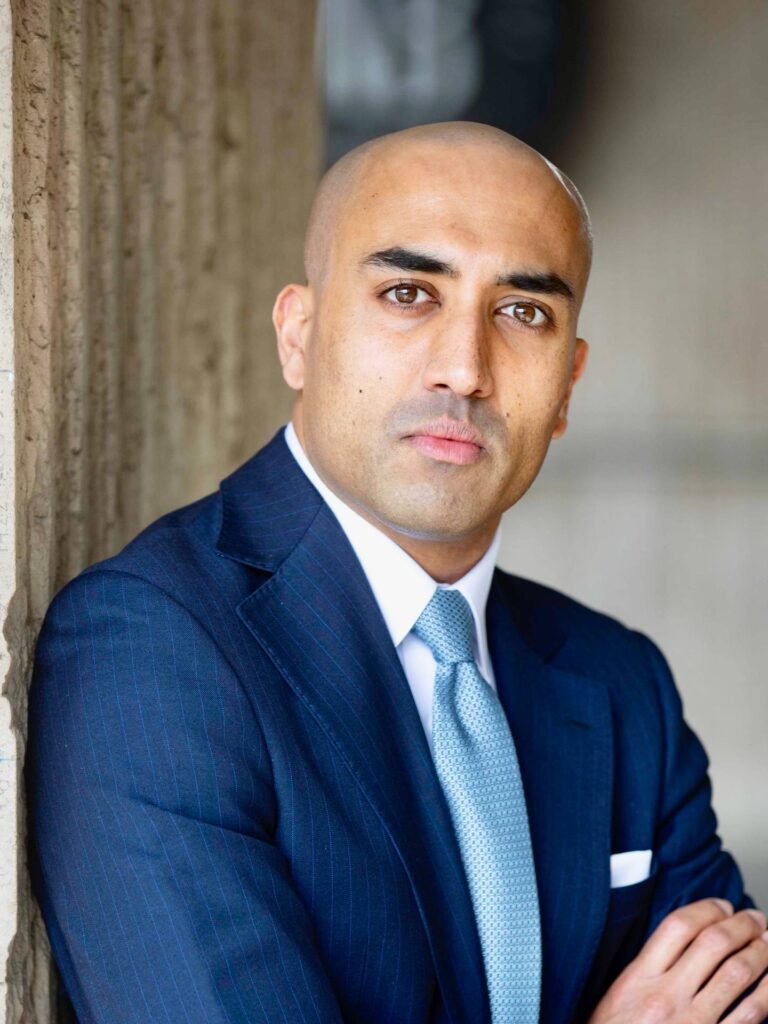
Abishur Prakash is a geopolitical strategist, author and the founder of The Geopolitical Business, a Toronto-based advisory firm. His work focuses on how geopolitics reshapes technology, trade and the operating environment for organisations. He writes and speaks about the consequences of fragmentation, including the ways governments seek greater control over economic and technological dependencies.
Born in New Zealand to Indian parents and raised in Australia, Prakash is now based in Canada. His international upbringing informs a perspective that connects developments across regions rather than treating geopolitics solely as a relationship between established Western powers. He is a graduate of Toronto Metropolitan University, formerly Ryerson University.
His books develop different parts of the relationship between technology and global power. The two volumes of Next Geopolitics examine how emerging technologies can change strategic competition. Go.AI: Geopolitics of Artificial Intelligence focuses on AI, while The Age of Killer Robots considers autonomous weapons and their security implications. The World Is Vertical sets out his argument that globalisation is being reorganised around barriers and competing systems rather than simply disappearing.
His 2026 book, The Great Fracturing: How Geopolitics Is Breaking the World, extends that argument across trade, finance, connectivity, alliances and technology. Through his advisory work and public commentary, Prakash connects these themes with the questions facing executives, investors and policymakers. His firm’s stated practices include geopolitical risk, geo-economic analysis, scenario foresight and strategic advisory work.
For executive audiences, Prakash is relevant when a brief asks how political change could alter a business model’s international assumptions. His perspective can help a room examine where supply, technology or investment choices are exposed to competing national priorities. A strong discussion tests those connections against the organisation’s actual context, rather than treating an arresting geopolitical narrative as a complete answer to its strategic choices.