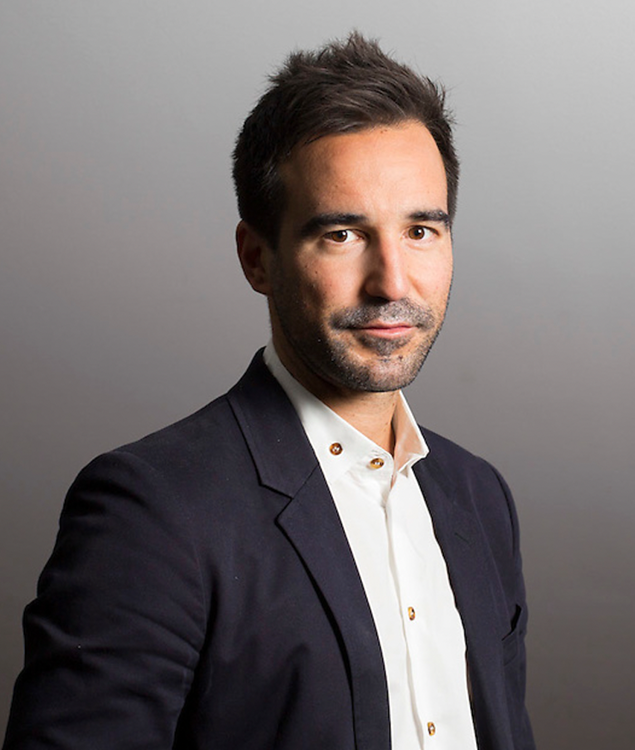
Tomas Chamorro-Premuzic is a business psychologist, author and Chief Science Officer at Russell Reynolds Associates. His work examines how organisations assess potential, develop leaders and use evidence to improve decisions about people. He also explores the human–AI interface, asking how technology interacts with personality, judgement and behaviour. His perspective combines academic research with experience leading assessment and workforce businesses, making the assumptions behind talent decisions a recurring subject of his work.
Chamorro-Premuzic joined Russell Reynolds Associates as the firm's first Chief Science Officer in 2025. In that role, he leads scientific research and innovation supporting the firm's work with leaders and organisations. He previously served as CEO of Hogan Assessment Systems and Chief Innovation Officer at ManpowerGroup. Those roles connect his research interests with the practical demands of evaluating people, developing assessment approaches and responding to changes in work. They also inform his attention to the gap between how organisations describe talent and how they actually make decisions.
Alongside his commercial work, he holds professorships in business psychology at University College London and Columbia University. He founded UCL's Industrial, Organisational and Business Psychology programme and has co-founded technology ventures including Deeper Signals and MyTrudy. Across research, teaching and entrepreneurship, his work considers how individual differences can be understood and used in an organisational setting. The combination provides a foundation for discussing people analytics while keeping the quality of the underlying judgement in view.
His books develop several distinct challenges to conventional leadership thinking. Why Do So Many Incompetent Men Become Leaders? examines the selection biases that can reward overconfidence while overlooking qualities associated with effective leadership. I, Human considers how AI can reinforce unhelpful human tendencies and what it takes to retain curiosity, self-control and agency. In Don't Be Yourself, he questions the appeal of authenticity when it becomes a reason to resist feedback or behavioural change. Together, these works connect leadership effectiveness with the willingness to examine and develop oneself.
For leadership, HR and talent audiences, Chamorro-Premuzic offers a perspective suited to difficult questions about promotion, managerial contribution and development. His work is especially relevant when an organisation wants to reconsider what it rewards, how it recognises potential or which human capabilities matter as AI changes work. The value for an event lies in making those assumptions discussable and connecting them with evidence, so that a debate about leadership can move towards the decisions and behaviours that shape people's experience.