Are you a keynote speaker? Submit your profile →
Menu

A 3+1 EXAMPLE / LEADERSHIP & AI

Leadership & AI.
Two curations.

Explore a first shortlist, then see how a sharper brief changes the recommendations. Three relevant speakers and one fresh perspective — with a reason for every choice.

Illustrative leadership summit · 180 senior leaders · English

Get your own 3+1 shortlist ↗

Free & without obligation.

V1 / INITIAL CURATION

The starting question

An illustrative brief for a leadership summit.

Key question
How should we lead when AI changes how our people work and make decisions?
Audience
180 senior leaders from an international business: business-unit heads and leaders in operations, HR, technology and commercial functions. AI experience varies widely.
Desired impact
Build a shared understanding of the leadership challenge, challenge assumptions and identify the questions our teams should address next.

THE 3

Three relevant voices

Three alternative routes into the question — each with a clear reason for being here.

01
Ethan Mollick

Ethan Mollick

AI, experimentation and human judgement

View speaker profile
Core message

Leaders need first-hand experience of AI’s capabilities and limitations. Responsible experimentation helps them distinguish useful assistance from convincing errors, while keeping people accountable for the result.

Why this fits

A strong entry point for an executive audience with uneven AI experience. Mollick connects the technology with everyday knowledge work and gives the room a shared basis for discussing what to test, where to exercise judgement and what should remain a human responsibility.


02
Lynda Gratton

Lynda Gratton

Leadership, work redesign and human adaptability

View speaker profile
Core message

The leadership challenge is to redesign work so that technological change strengthens the organisation’s capacity to learn, collaborate and adapt. New tools are only one part of that wider choice.

Why this fits

Gratton broadens the discussion from AI adoption to its consequences for people and the organisation. Her perspective suits leaders who need to think about capability, collaboration and careers together, and avoid reducing transformation to a short-term efficiency exercise.

03
Tsedal Neeley

Tsedal Neeley

Digital leadership, trust and organisational change

View speaker profile
Core message

Digital transformation depends on how people understand change, build trust and coordinate around new ways of working. Leaders need to develop the mindset and organisational conditions that make adoption meaningful.

Why this fits

Neeley connects the AI agenda with the leadership behaviours needed across functions and locations. She offers a useful lens for an international management audience facing different levels of confidence, resistance and readiness, with trust and collaboration central to the discussion.

THE +1

+1

A different angle on the same leadership challenge.

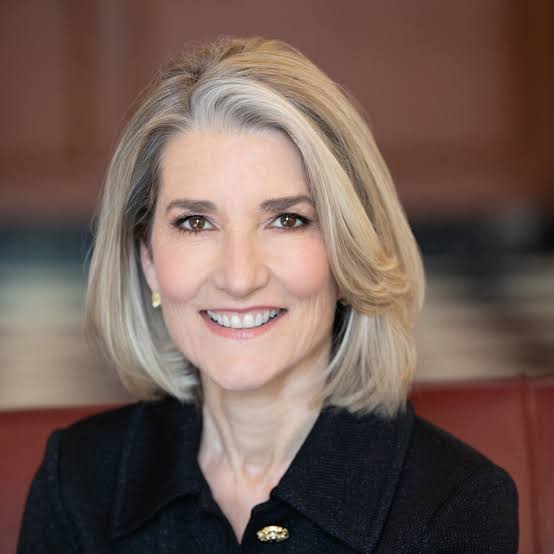
Amy Edmondson

Amy Edmondson

Psychological safety and organisational learning

View speaker profile
Core message

Organisations learn when people can question assumptions, acknowledge uncertainty and report mistakes while maintaining high standards. Those conditions become especially valuable when a new technology changes how work is done.

Why the wildcard

The wildcard shifts the question from what AI can do to what people feel able to say about it. Edmondson brings a complementary leadership lens: will employees challenge an AI-generated answer, surface a failed experiment or admit that they do not yet understand the tool?

NOW REFINE THE DIRECTION

Now sharpen the brief

In this example, the organiser keeps Mollick and asks for a stronger focus on workflows, accountability and implementation. See how that changes the recommendations.

See V2 — refined curation →

V2 / REFINED CURATION

A sharper direction

The same audience. A more specific leadership task.

Key question
How do we redesign AI-enabled work, clarify human accountability and lead adoption across functions?
Audience
180 senior leaders from an international business: business-unit heads and leaders in operations, HR, technology and commercial functions. AI experience varies widely.
Desired impact
Help leaders frame a 90-day agenda: choose workflows to examine, define human checks and decision ownership, and identify the capabilities and collaboration the change requires.

THE REFINEMENT REQUEST

Keep Ethan Mollick. Make the remaining selection more practical and focused on organisational implementation. We want to discuss how leaders redesign workflows, clarify human accountability and help teams adopt AI. Less broad future-of-work orientation; more decisions we can take into the next quarter.

What changed: Mollick stays. Iansiti and Jesuthasan bring operating-model and work-design perspectives. Klotz becomes the wildcard, challenging leaders to remove unnecessary work before adding AI.

THE 3

Three relevant voices

Three alternative routes into the question — each with a clear reason for being here.

01
Ethan Mollick

Ethan Mollick

AI, experimentation and human judgement

View speaker profile
Core message

Test AI in the work people actually do. Examine where it helps, where quality deteriorates and where a person must check the output; use those observations to guide decisions about deployment.

Why this fits

Retained from V1, with a sharper brief. His role in this selection is to connect practical experimentation with explicit human judgement: what should a leadership team test before extending AI use, and what evidence would justify changing a workflow?

02
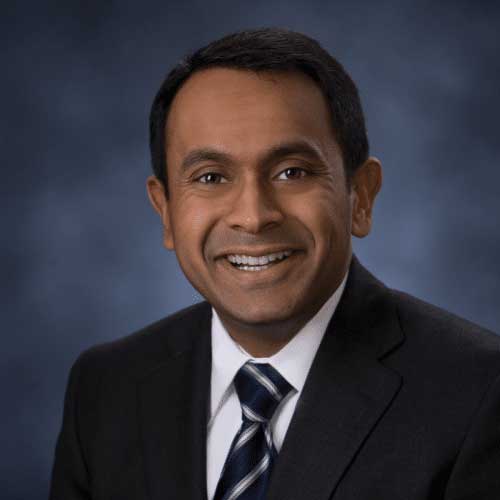
Marco Iansiti

Marco Iansiti

AI strategy and operating-model transformation

View speaker profile
Core message

AI changes more than individual tasks. Its strategic value depends on the operating model: the data, processes, responsibilities and feedback loops through which a business creates and delivers value.

Why this fits

Added because the revised question concerns organisational decisions. Iansiti helps frame the move from disconnected pilots to a coherent operating model, giving senior leaders a way to discuss ownership, cross-functional dependencies and the architecture needed to scale learning.

03
Ravin Jesuthasan

Ravin Jesuthasan

Work redesign, skills and human–AI collaboration

View speaker profile
Core message

Start with the work, then consider the technology. Breaking activities into tasks and skills helps leaders decide what to automate, what to augment and where human contribution should be redesigned.

Why this fits

Added to make the discussion concrete for business and people leaders. Jesuthasan brings a task-and-skills lens to workflow redesign, helping the audience examine how responsibilities, capability needs and opportunities for people change when AI enters an existing process.

THE +1

+1

A different angle on the same leadership challenge.

Leidy Klotz

Leidy Klotz

Behavioural science, subtraction and organisational complexity

View speaker profile
Core message

Before adding AI to a process, ask what the process can do without. Deliberately considering subtraction helps leaders identify unnecessary steps, approvals and demands that a technology project might otherwise preserve or amplify.

Why the wildcard

Klotz introduces a different test for the implementation agenda: does this work need to be automated, redesigned or removed? His research on our tendency to add rather than subtract gives leaders a useful counterpoint to AI expansion, keeping attention on simpler workflows and organisational capacity.

COMPARE THE TWO

A clearer brief changes the shortlist.

V2 shows how the recommendations respond when the task becomes more specific. Both versions remain available so you can compare the reasoning.

Compare with V1 — initial curation →

YOUR QUESTION COMES NEXT

Your question comes next

Tell us what the keynote should answer, who is in the room and the impact you want. Your first 3+1 gives us a starting point; personal advice takes you through fit, fees, availability and booking.

Get your own 3+1 shortlist ↗

This is an illustrative curation, not a client case or a confirmed booking. The speaker choices and fit assessments are editorial examples. Fees, availability and the final scope are confirmed individually.